Consequential Preservation
Adaptive Reuse proposal to innovate, repurpose, and preserve the Mang Thít District’s historic architecture and brick kilns, by supporting South Vietnam’s cultural heritage and local economy.
Location: Mang Thít, Vietnam
Date: Spring 2025
Professor: Ha Nguyen
Peers: Kiera Rupp & Sophie Smoke
Site Context
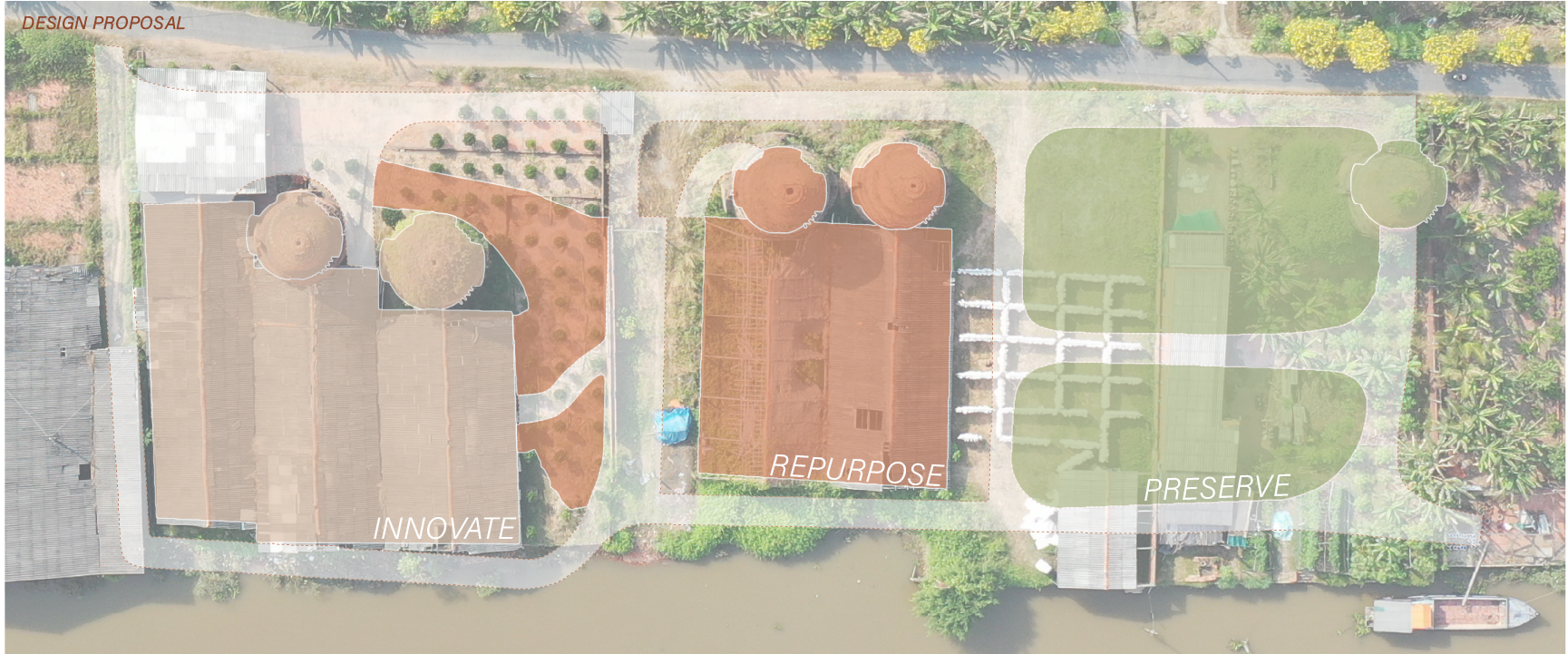
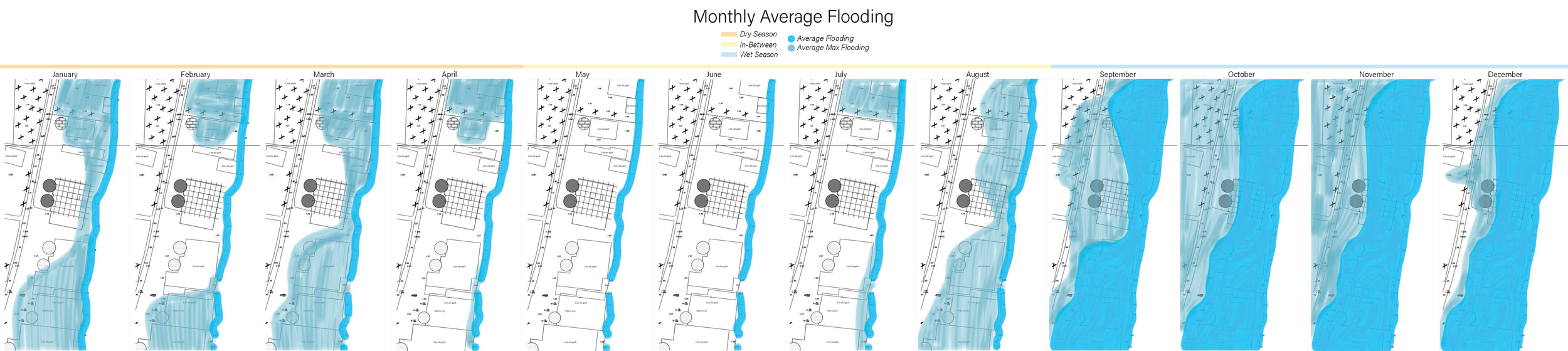
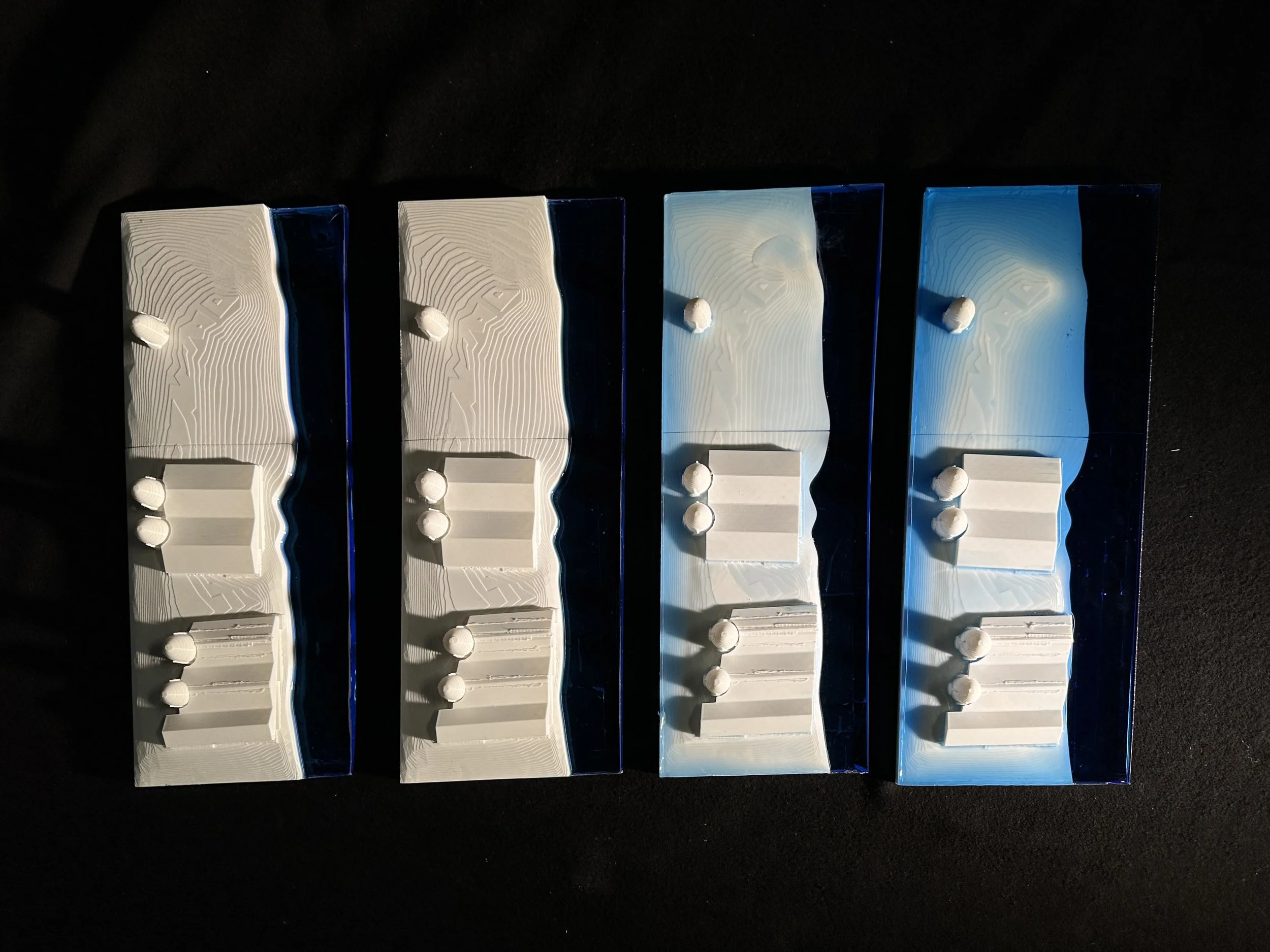
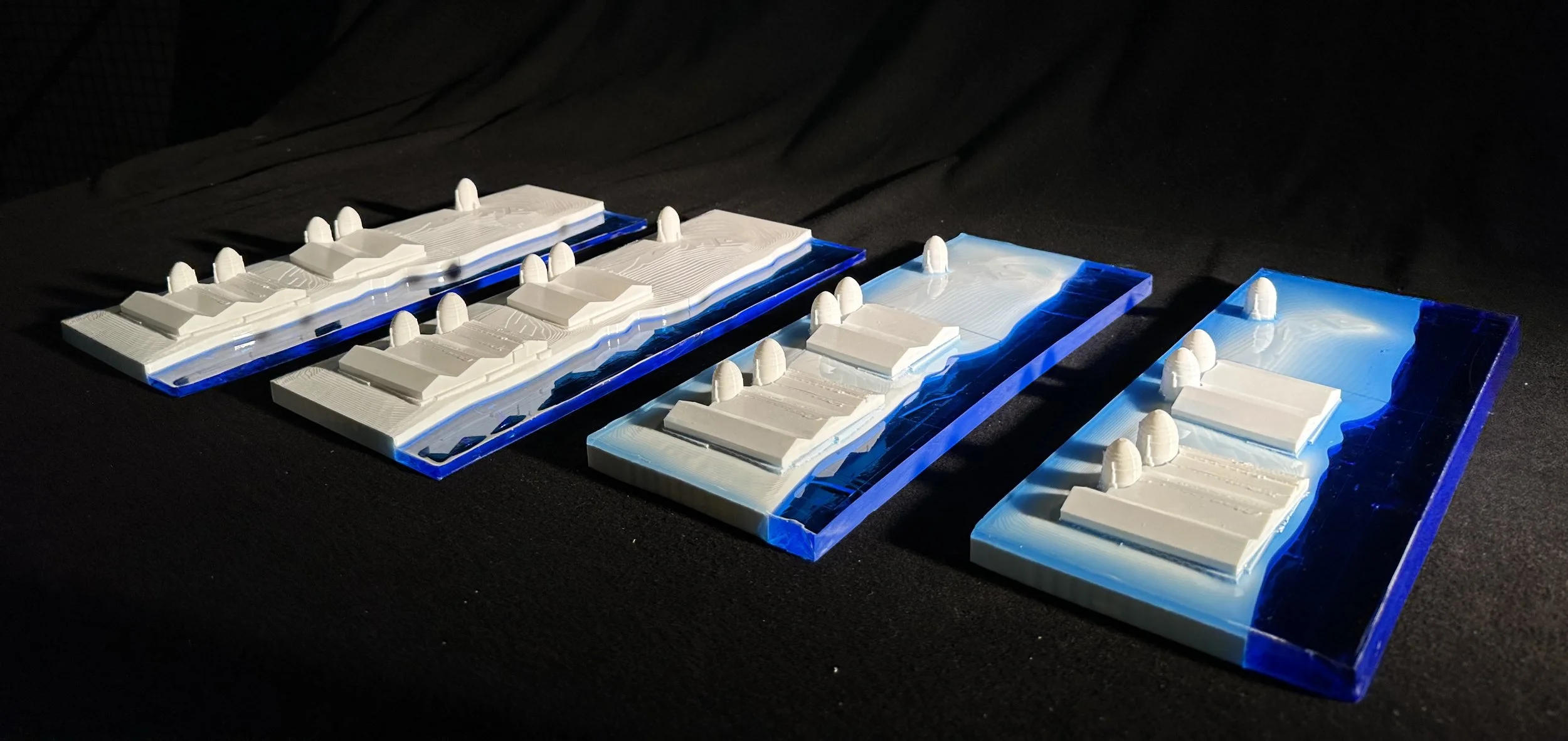
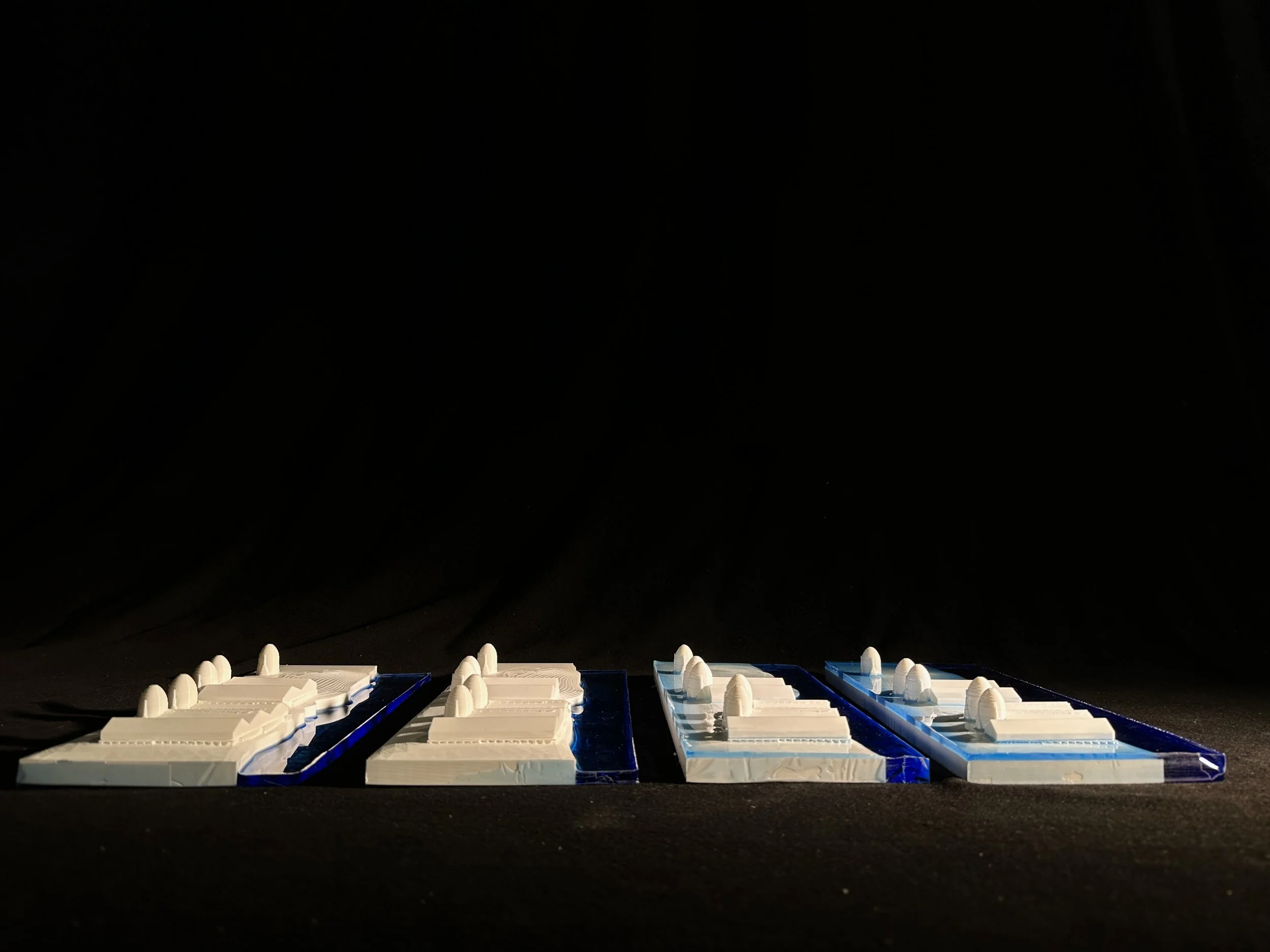
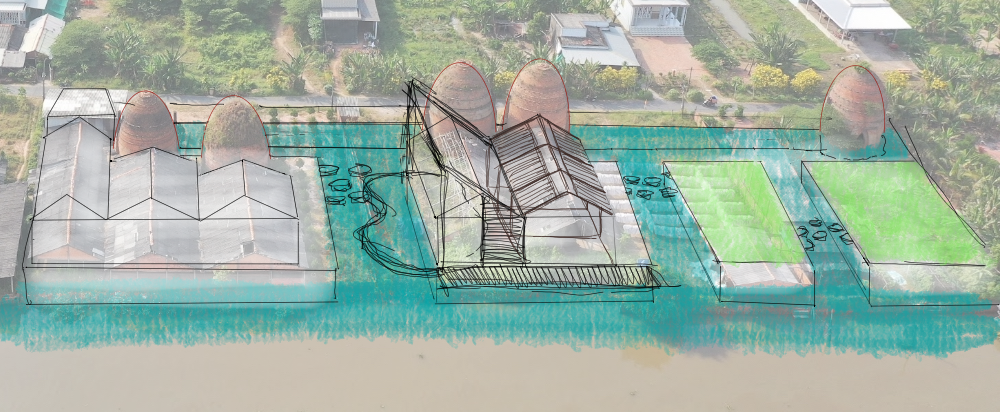
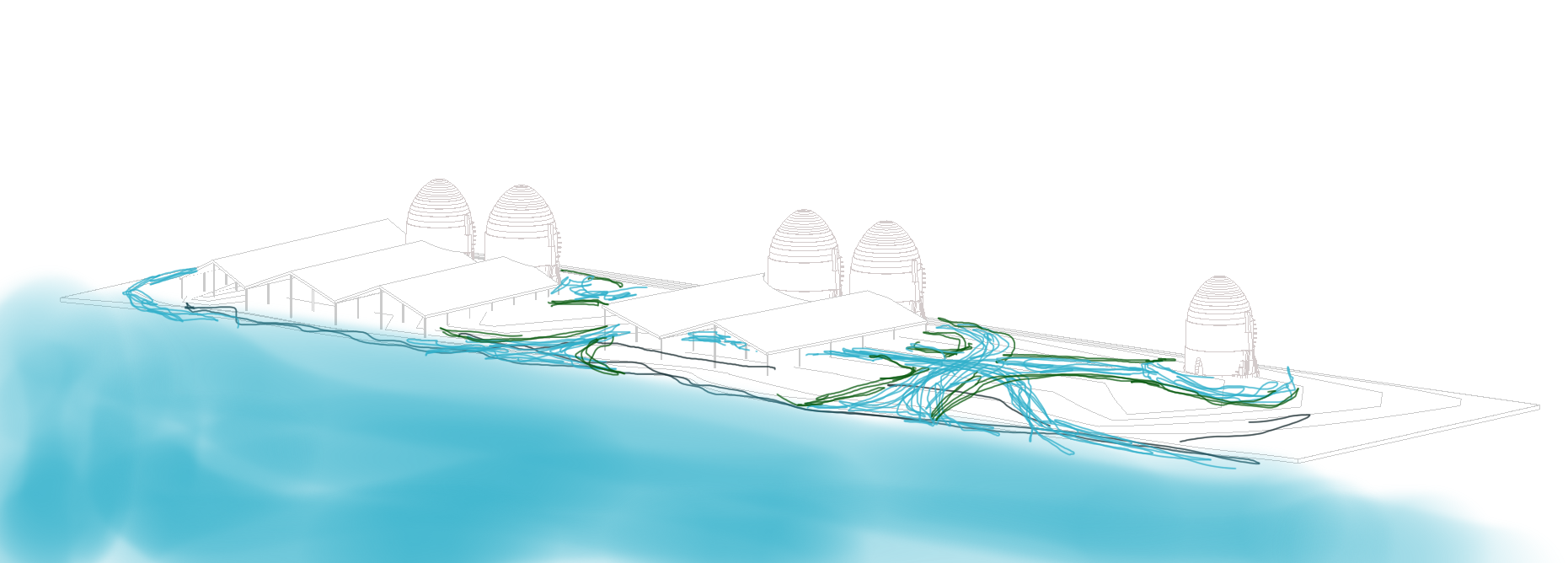
Mang Thít District, located along the Mekong River in southern Vietnam, is a historic brickmaking village known for its traditional kilns and riverside warehouses. The village’s traditional craft and livelihood are threatened by government policies to shut down kilns due to CO₂ emissions. These policies and year-round flooding place pressures on the villages cultural heritage and traditional craft.
Site Research
Schematic Design
Landscape Design
Warehouse + Kiln Design
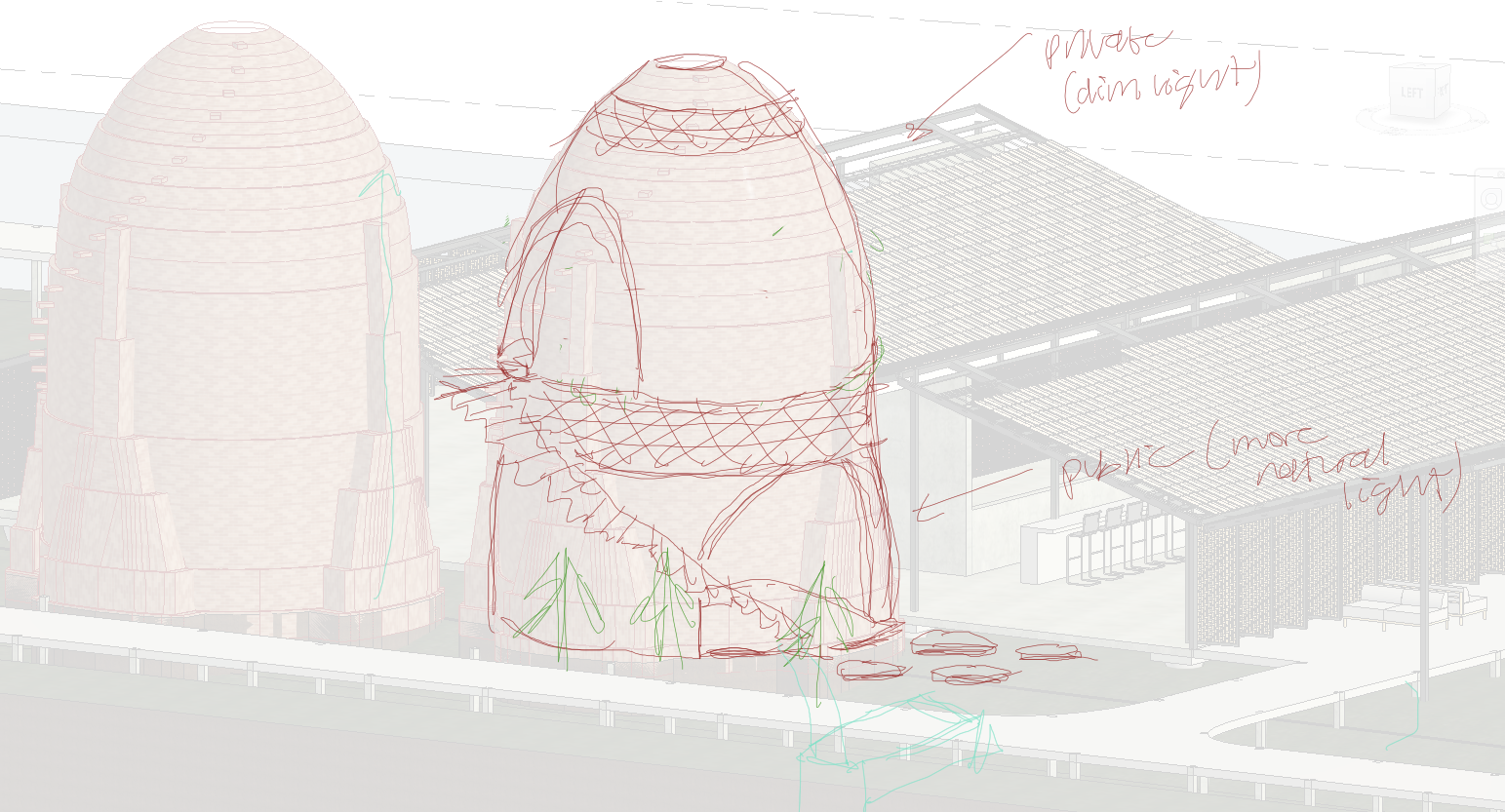
Innovate
Supporting the elimination of CO₂ emissions, introducing modular spaces for evolving use, and promoting cultural learning of local traditions.
Warehouse + Landscape Design
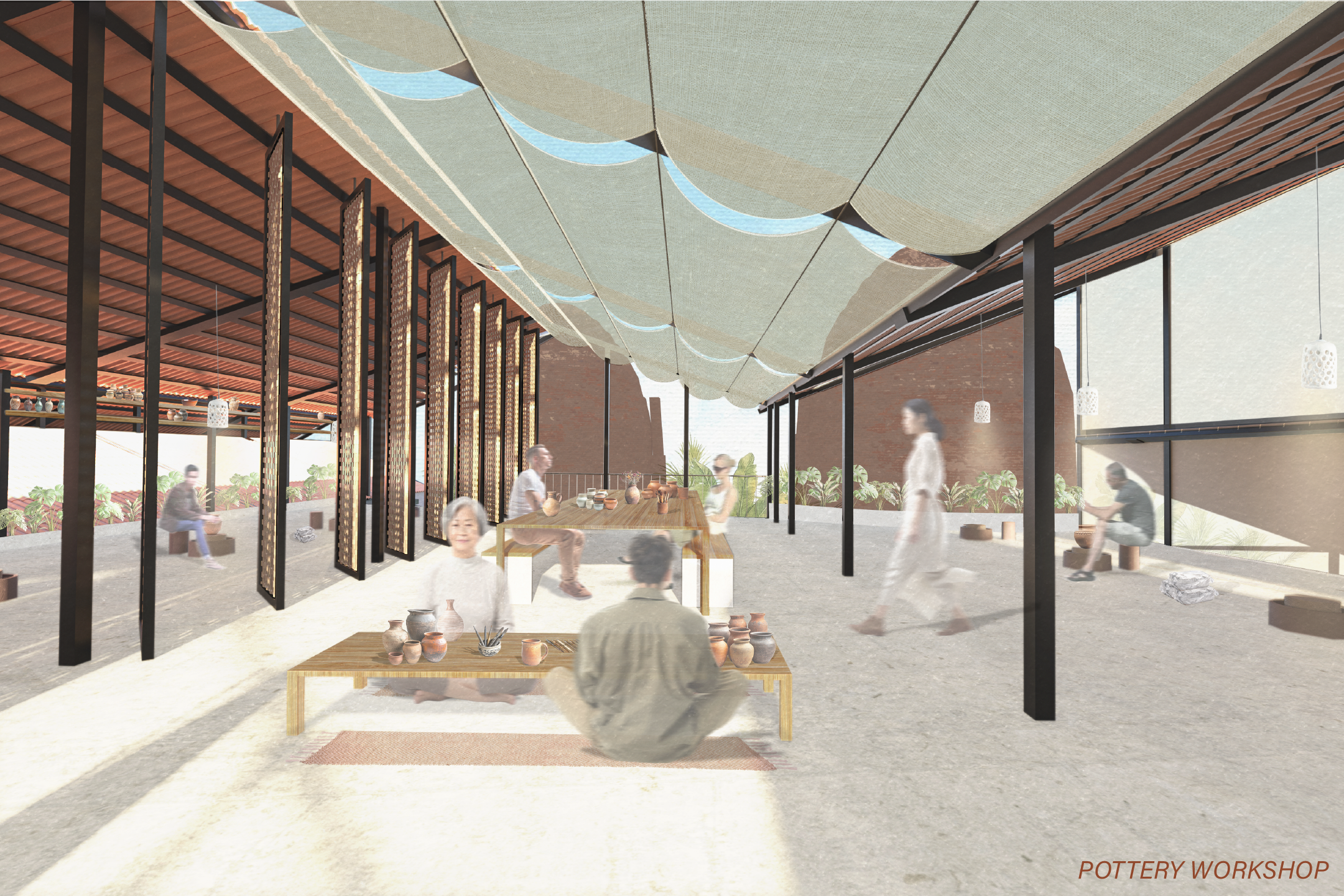
Pottery Warehouse
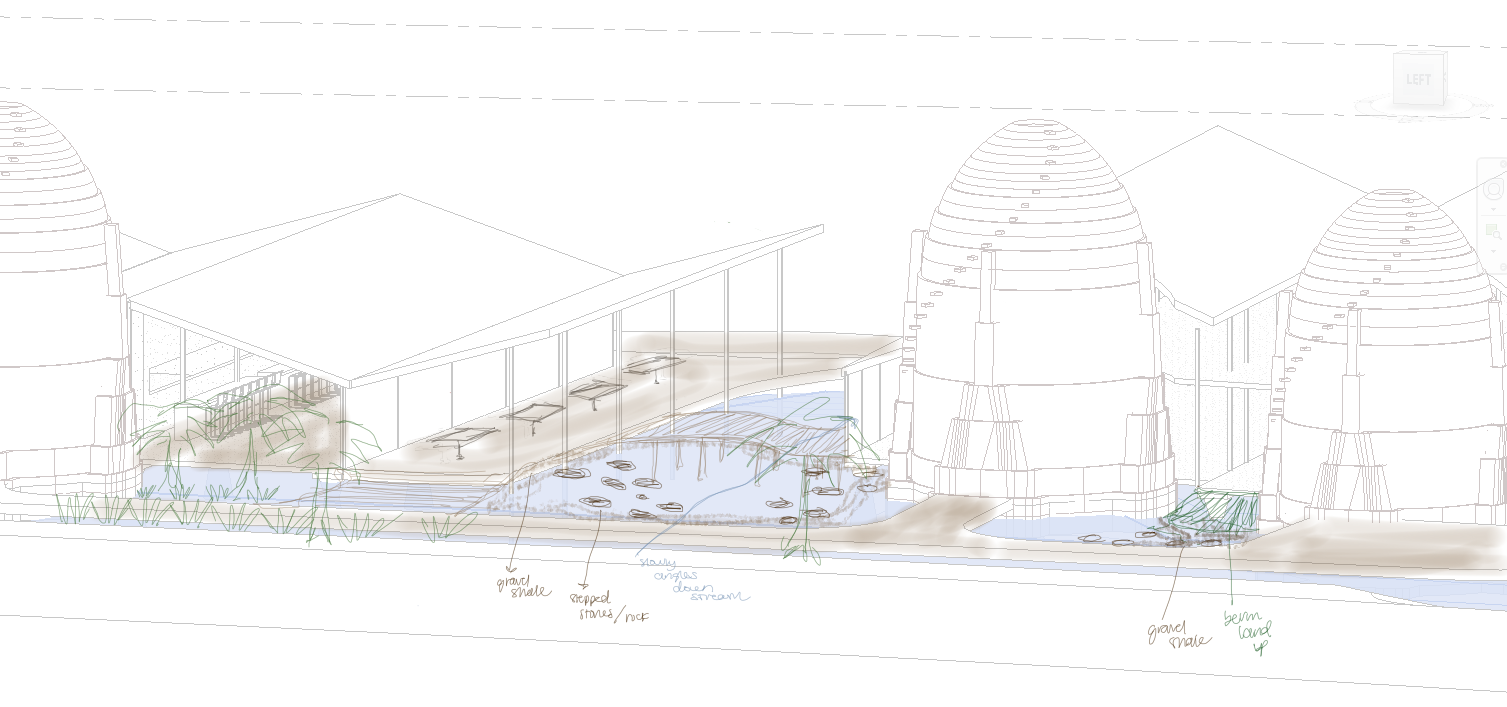
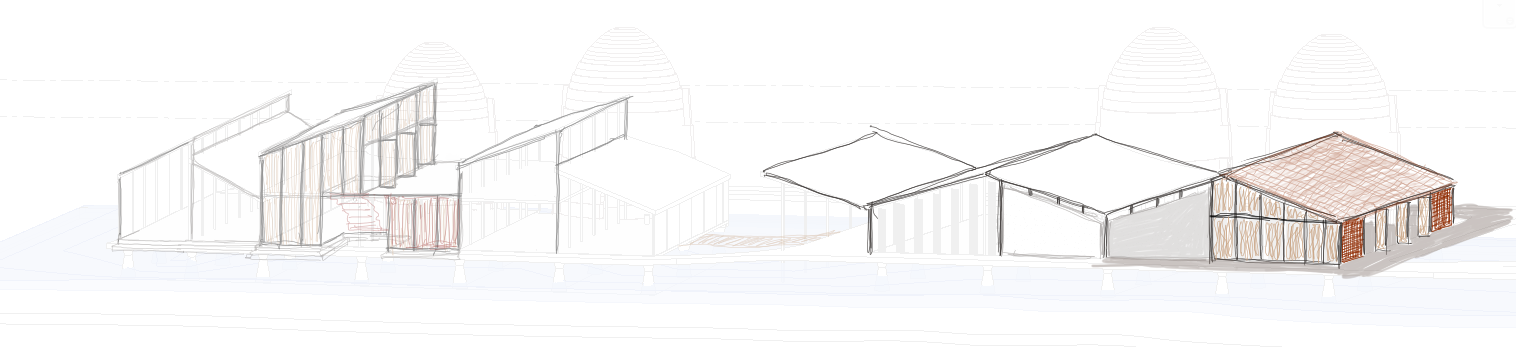
A repurposed upper-level warehouse that serves as a hands-on pottery workshop where local artisans teach traditional clay techniques. Designed for interaction, the space features both raised and floor-level community tables, open-air ventilation with fabric shading, and an electric kiln that symbolizes craft-based innovation with reduced environmental impact. The workshop sustains cultural heritage while engaging visitors in an immersive, educational experience.
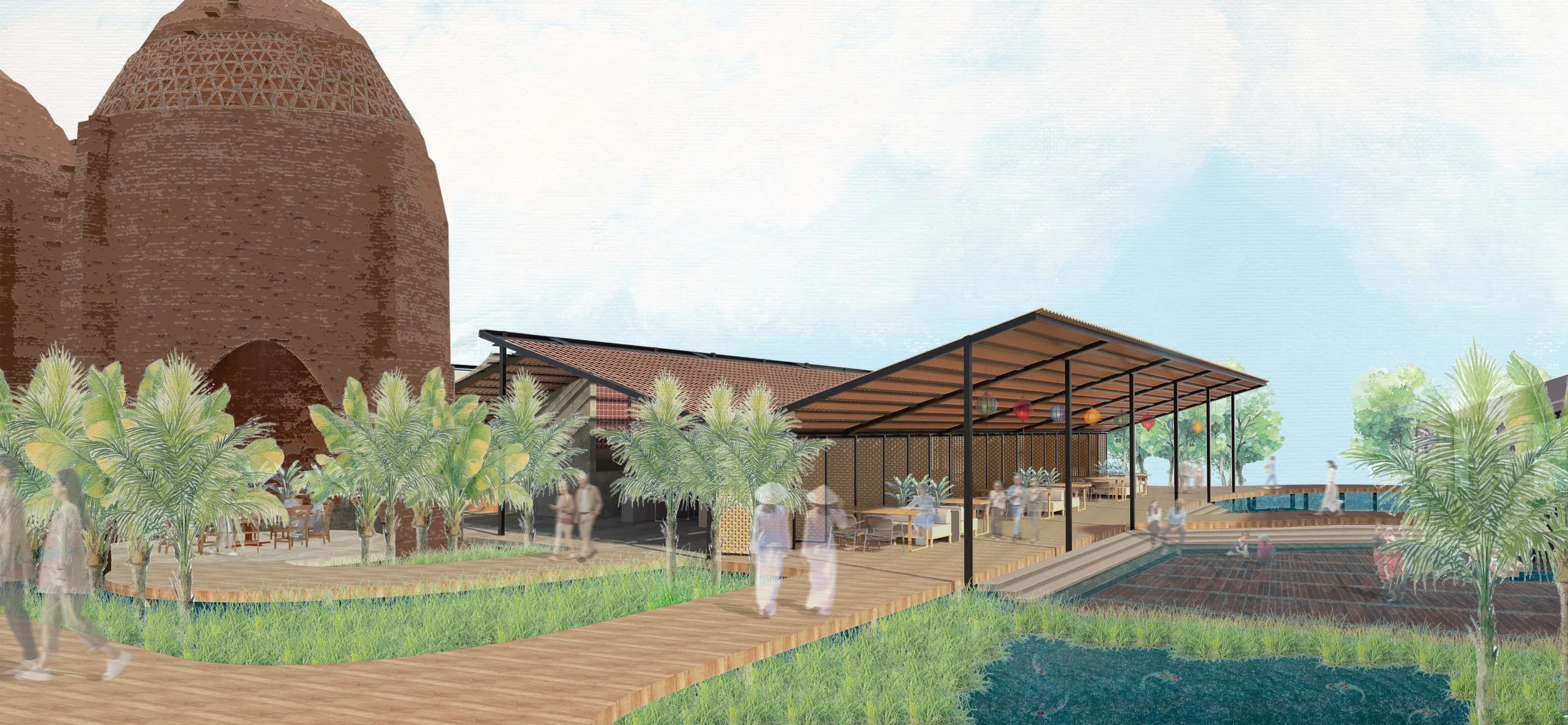
Operable Landscape / Elevated Boardwalk
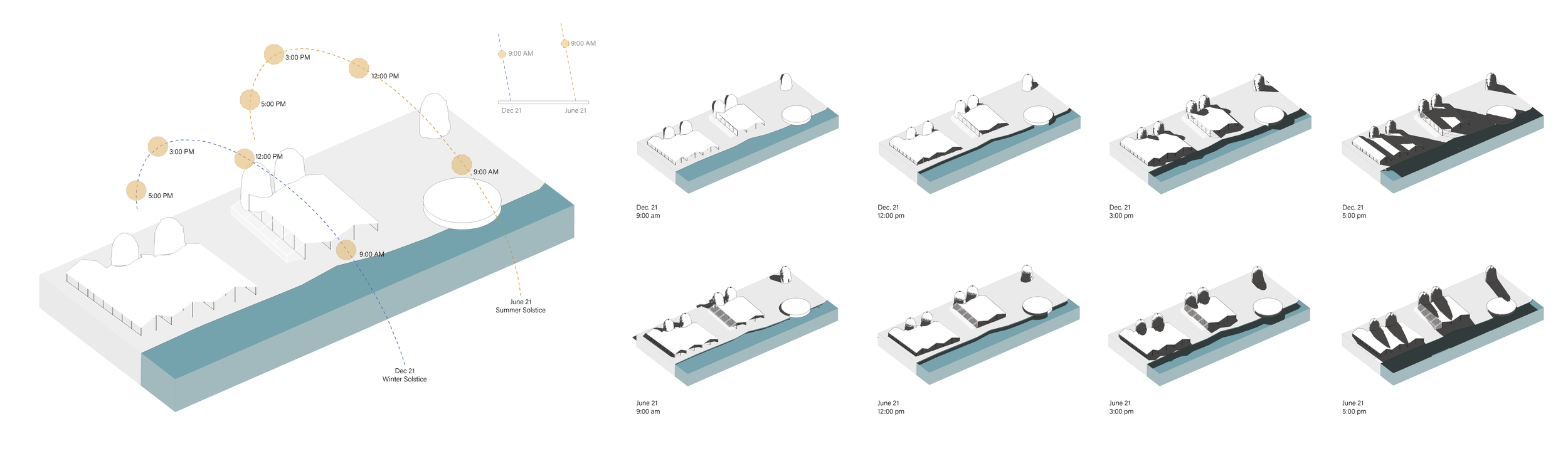
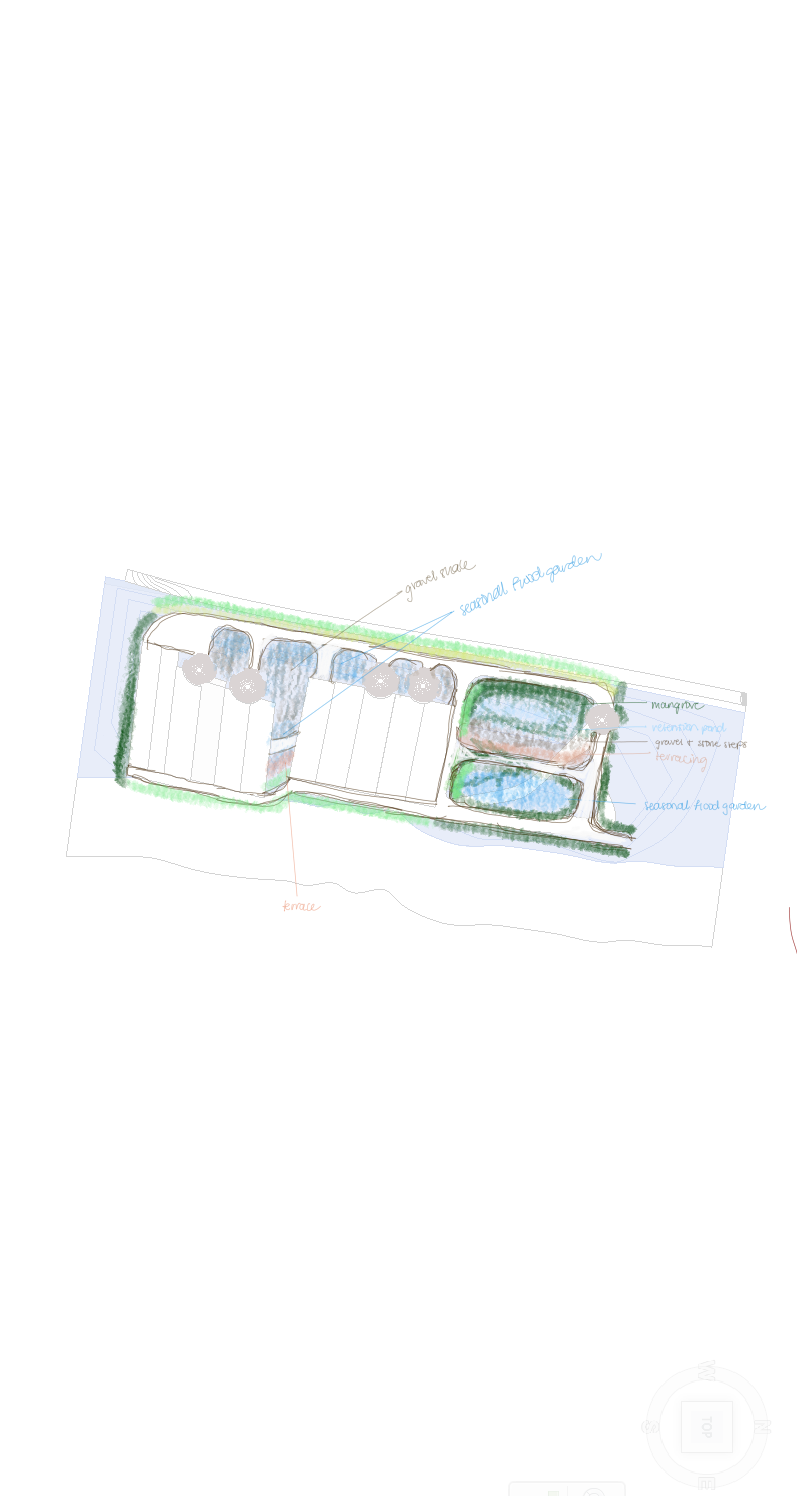
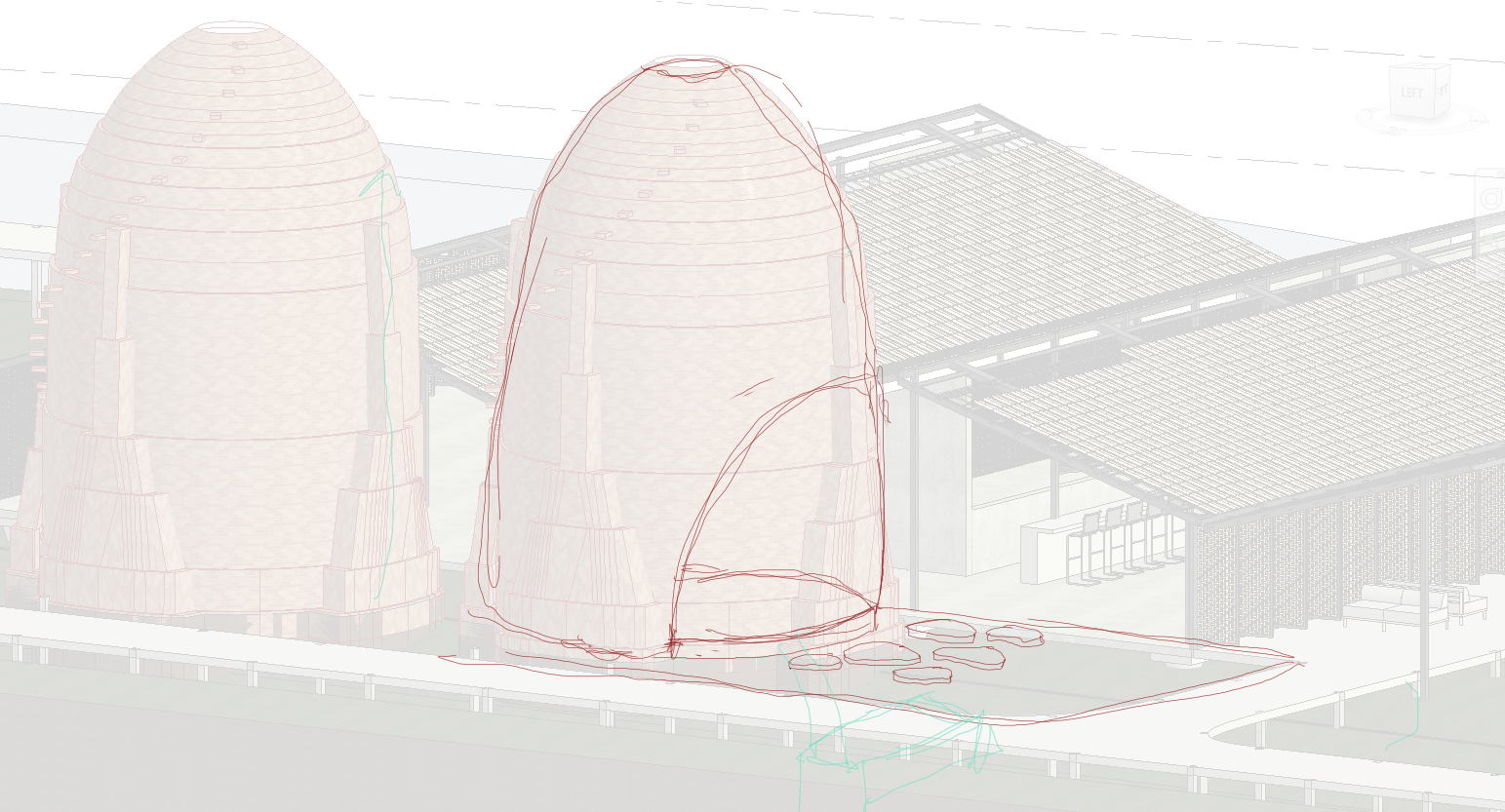
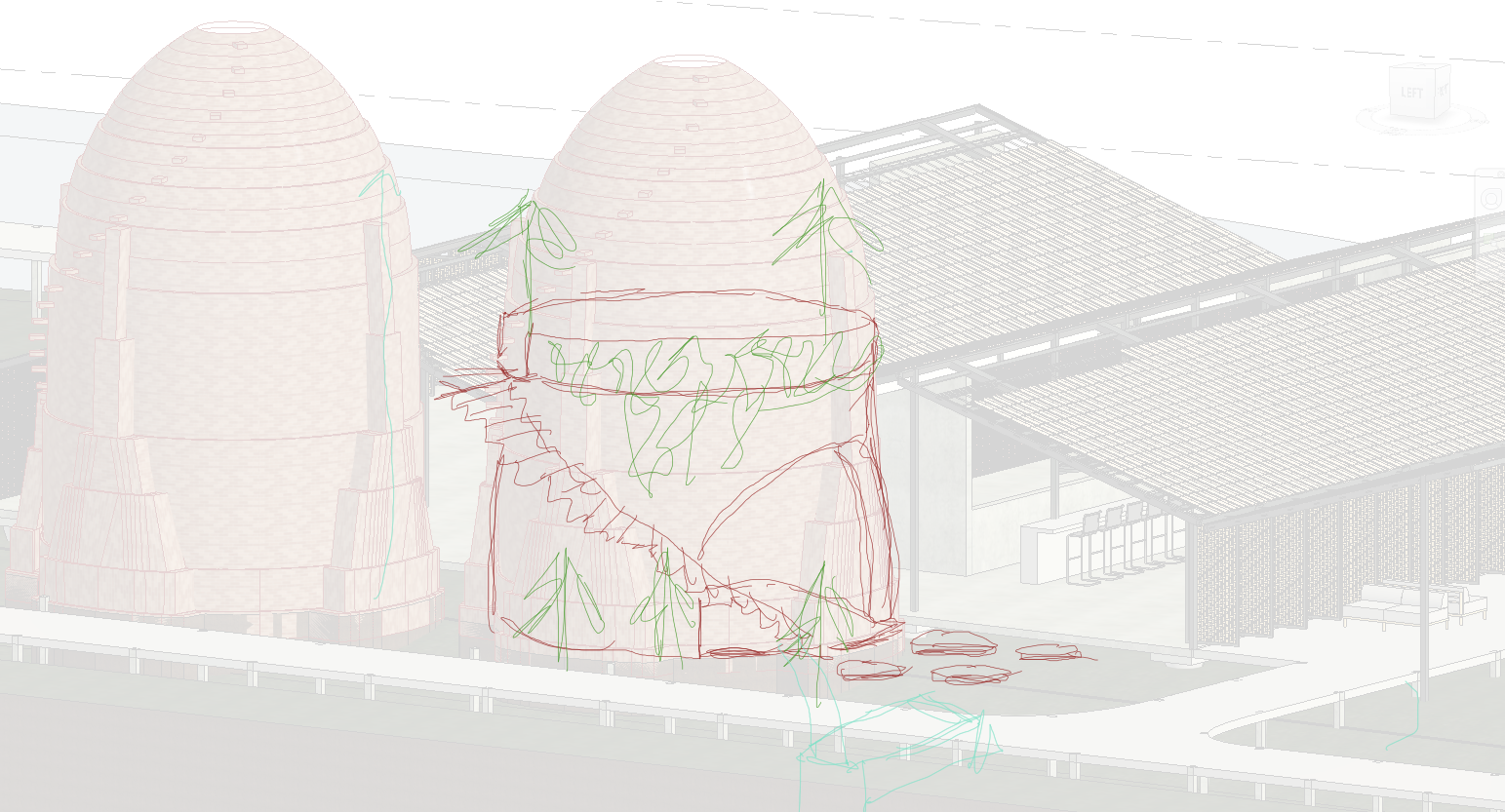
Raised 7 feet in response to tidal flooding data, the boardwalk provides year-round circulation through the site while protecting structures and visitors from seasonal water rise. Its curved form contrasts the rigid geometry of the existing warehouses, creating fluid movement through adaptive landscapes. Native vegetation — including mangroves and nipa palms — reinforces ecological resilience, stabilizes soil, supports biodiversity, and frames moments of pause for visitors.
Kiln Design
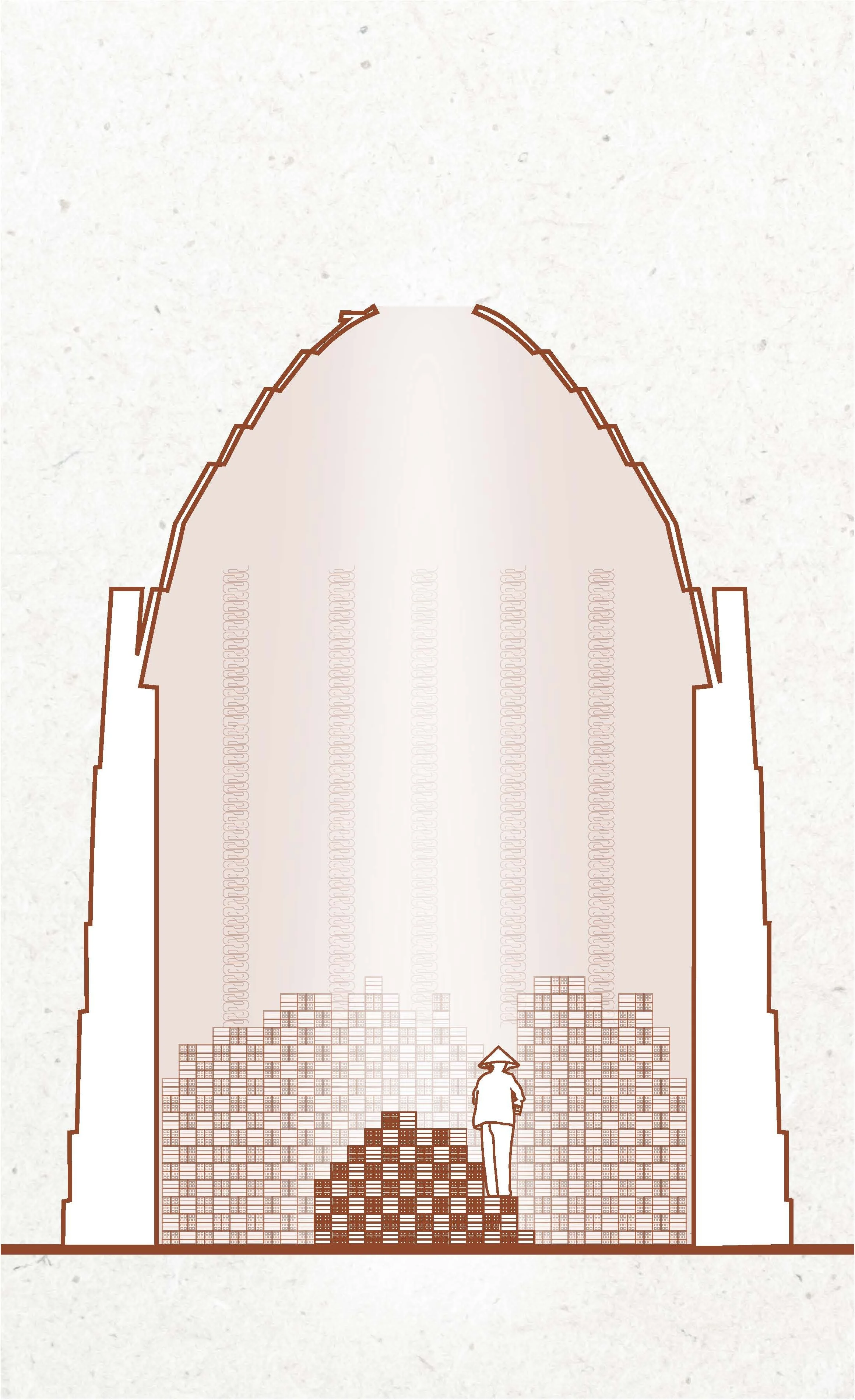
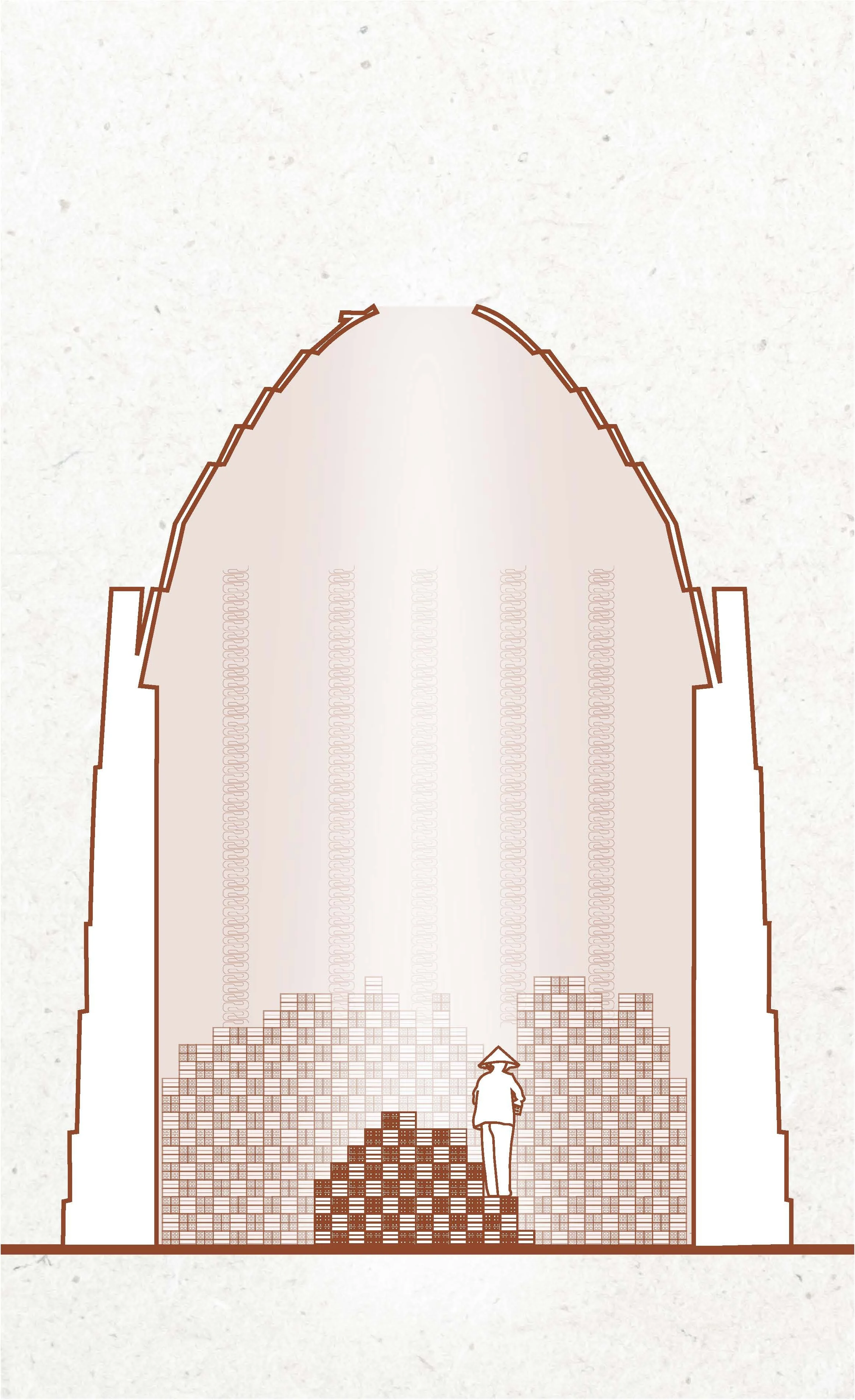
Electric Brick Kiln
A fully converted electric kiln that eliminates ash, smoke, and CO₂ emissions while preserving the traditional brick-firing process. This kiln represents the project’s shift from pollutive wood-firing to a sustainable, technologically driven method that honors craft without environmental cost.
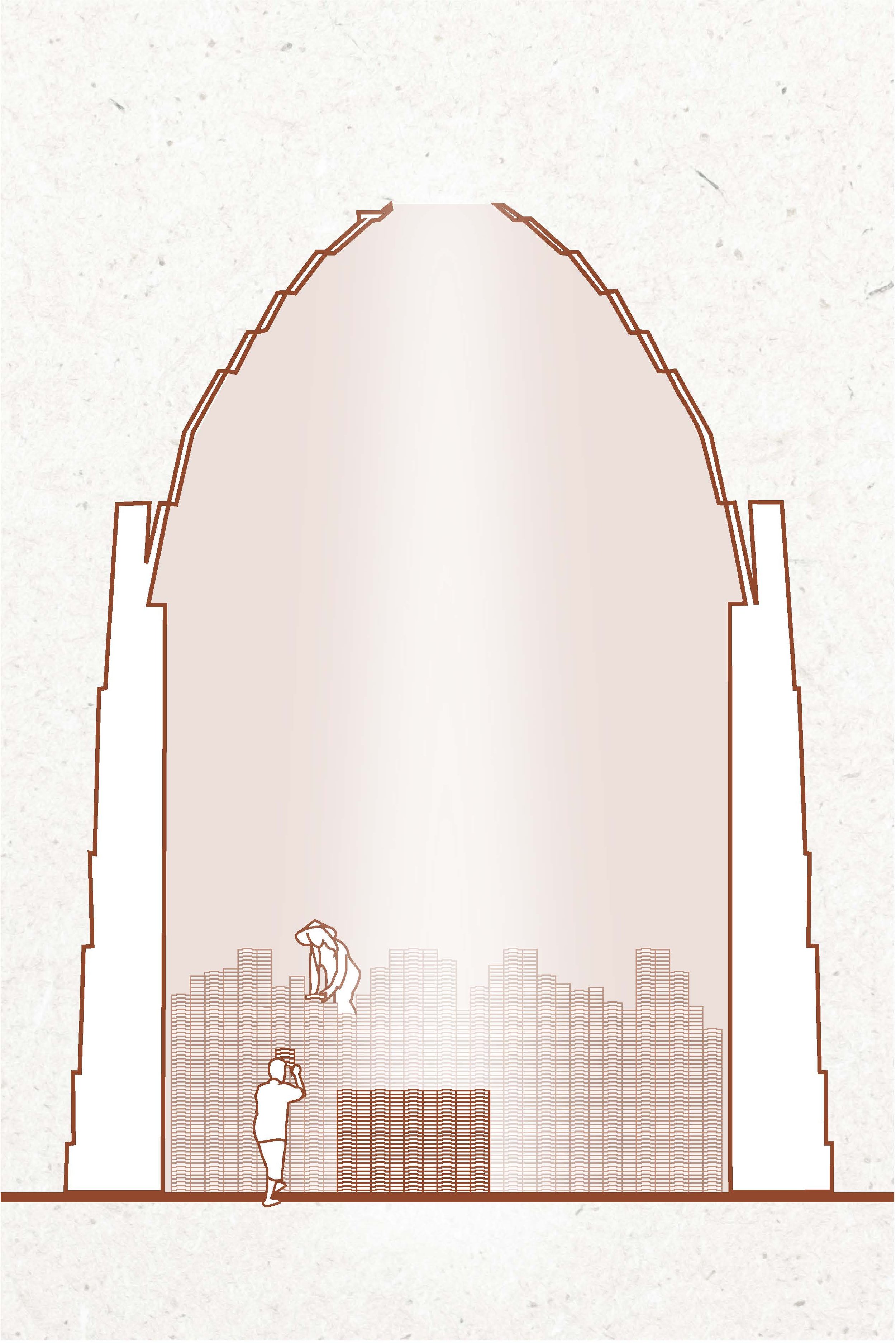
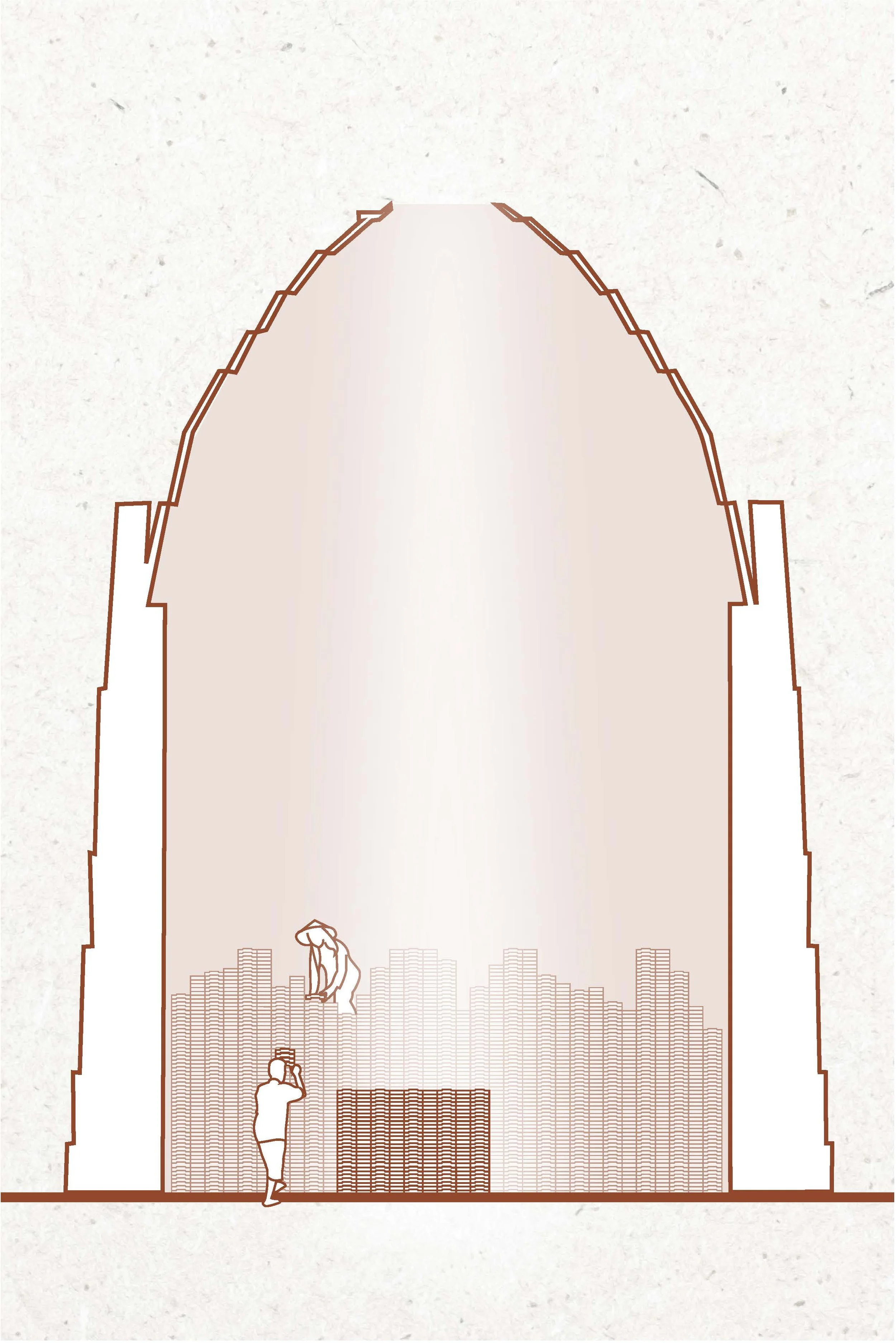
Storage Kiln
Adapted as a storage space for a new brick-making method that requires no firing. Bricks are formed through soil-cement compression, creating a low-carbon alternative currently being tested in the region. The kiln remains structurally intact, now functioning as a vessel for experimental material production rather than heat.
Repurpose
New programmatic activities promoting cultural awareness and local economy.
Warehouse + Landscape Design
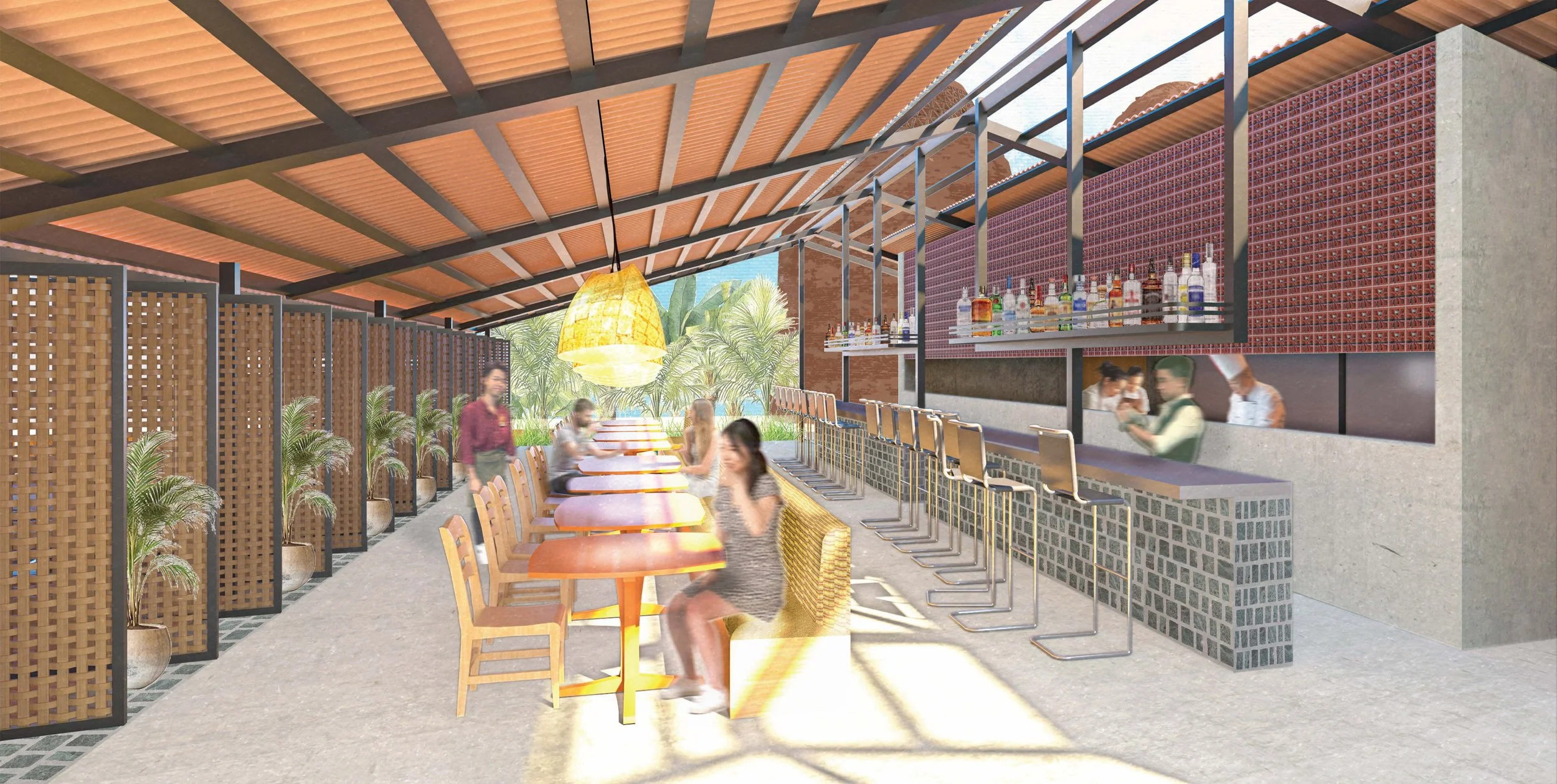
Farm-to-Table Restaurant
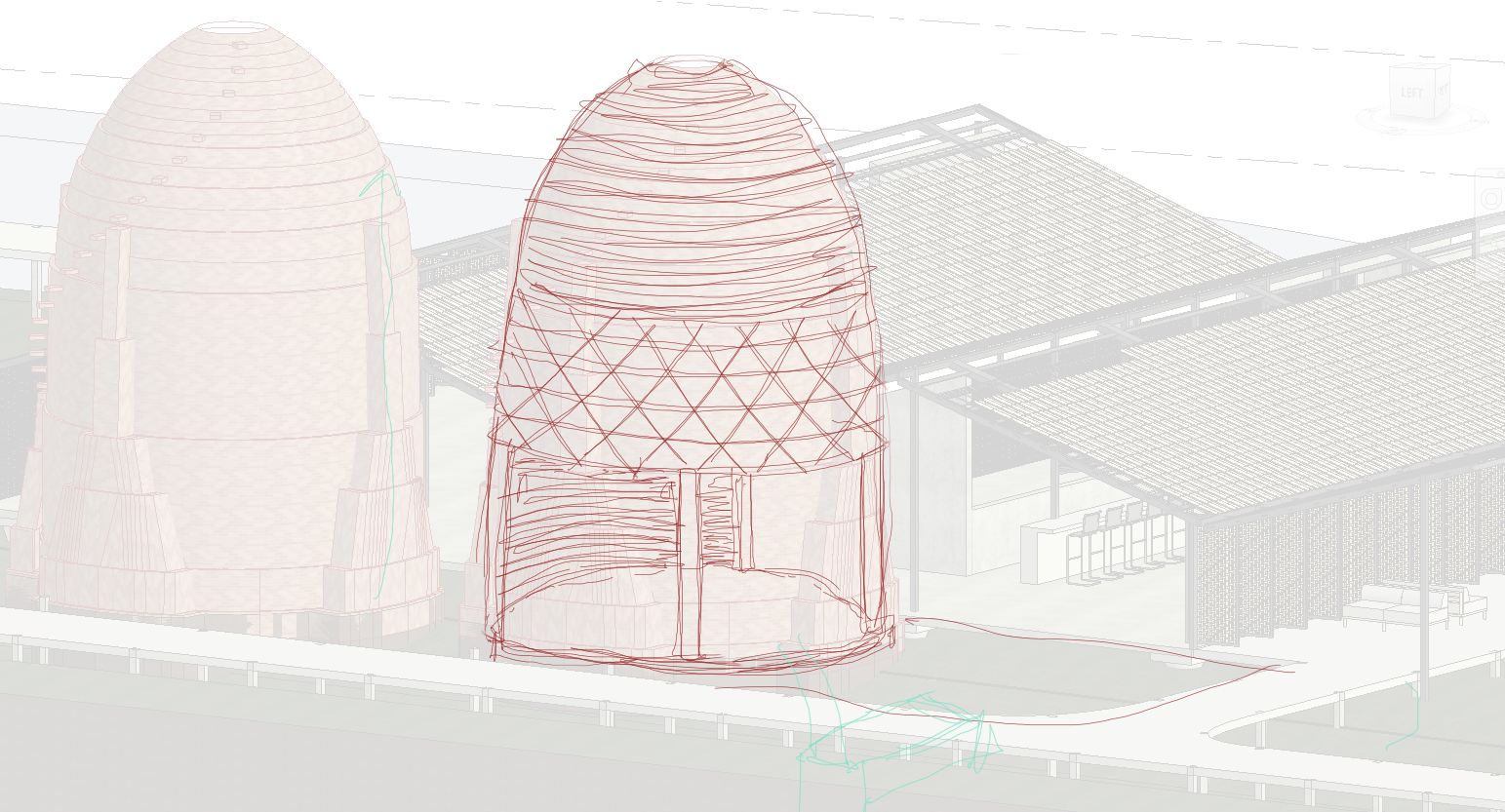
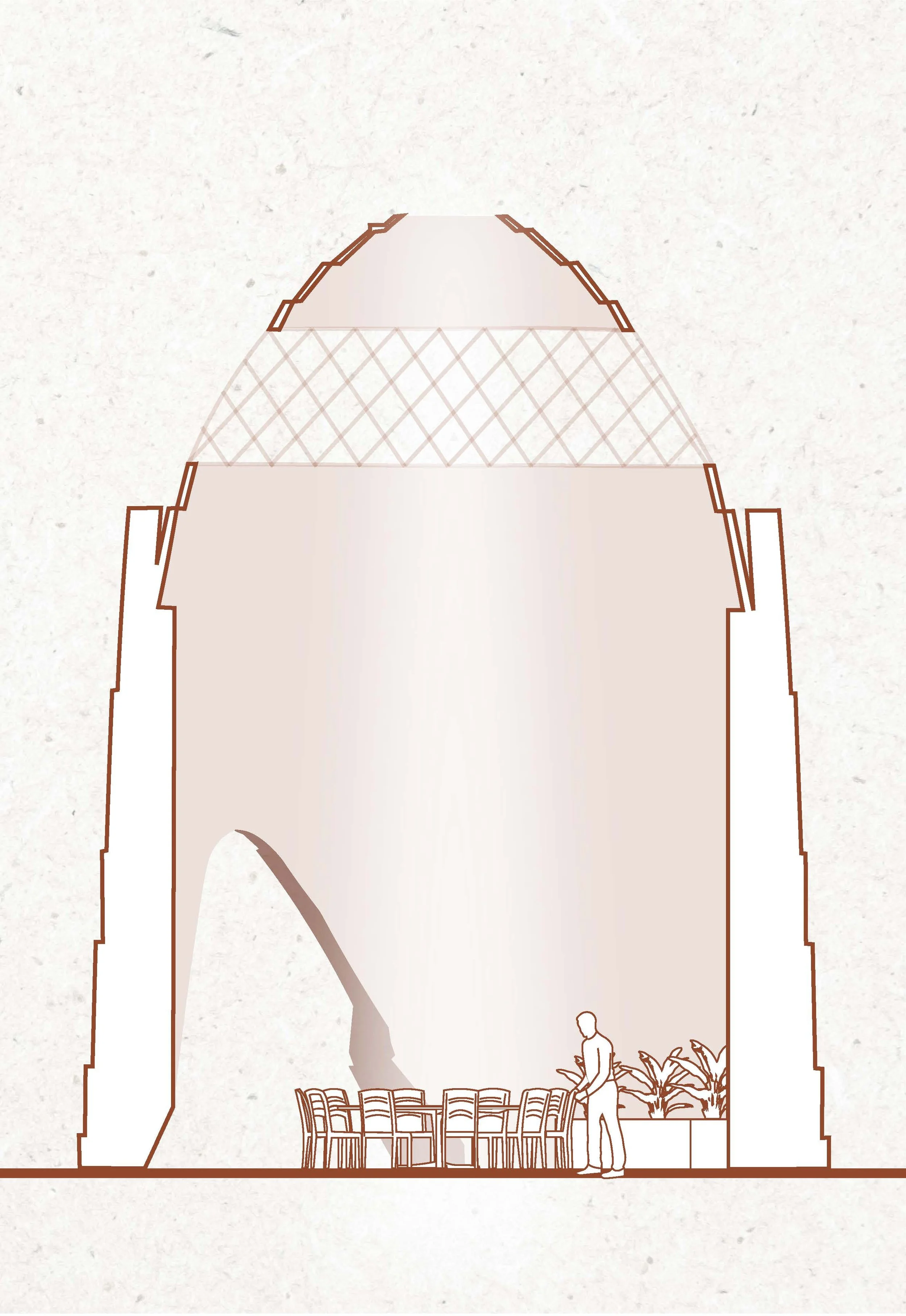
This warehouse is transformed into a farm-to-table restaurant that supports the local economy by sourcing ingredients from nearby farms. The architecture preserves the original brick structure while incorporating bamboo-woven pivoting doors that open onto outdoor seating. A connected kiln becomes an intimate ten-seat dining space, emphasizing the monumental scale of the kiln and offering a unique, ceremonial dining experience rooted in site history.
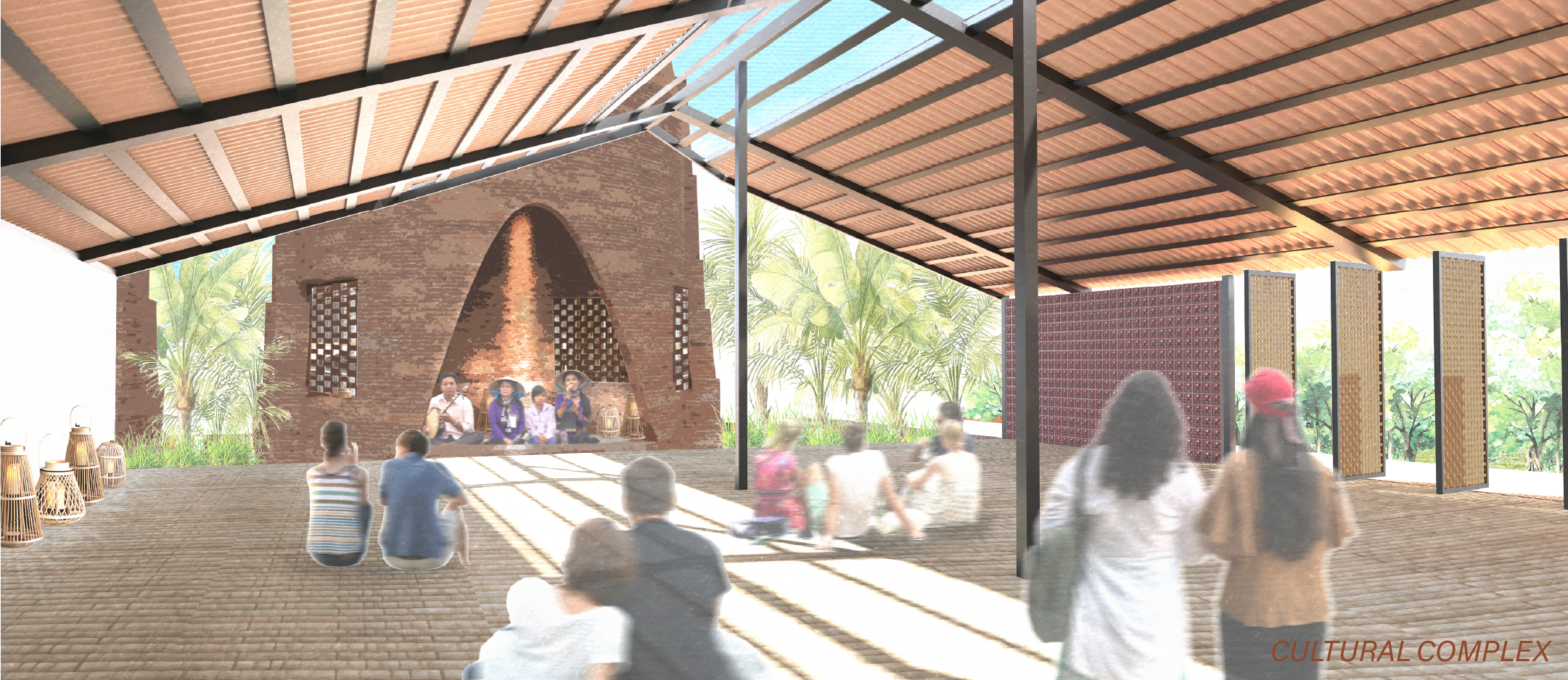
Cultural Center
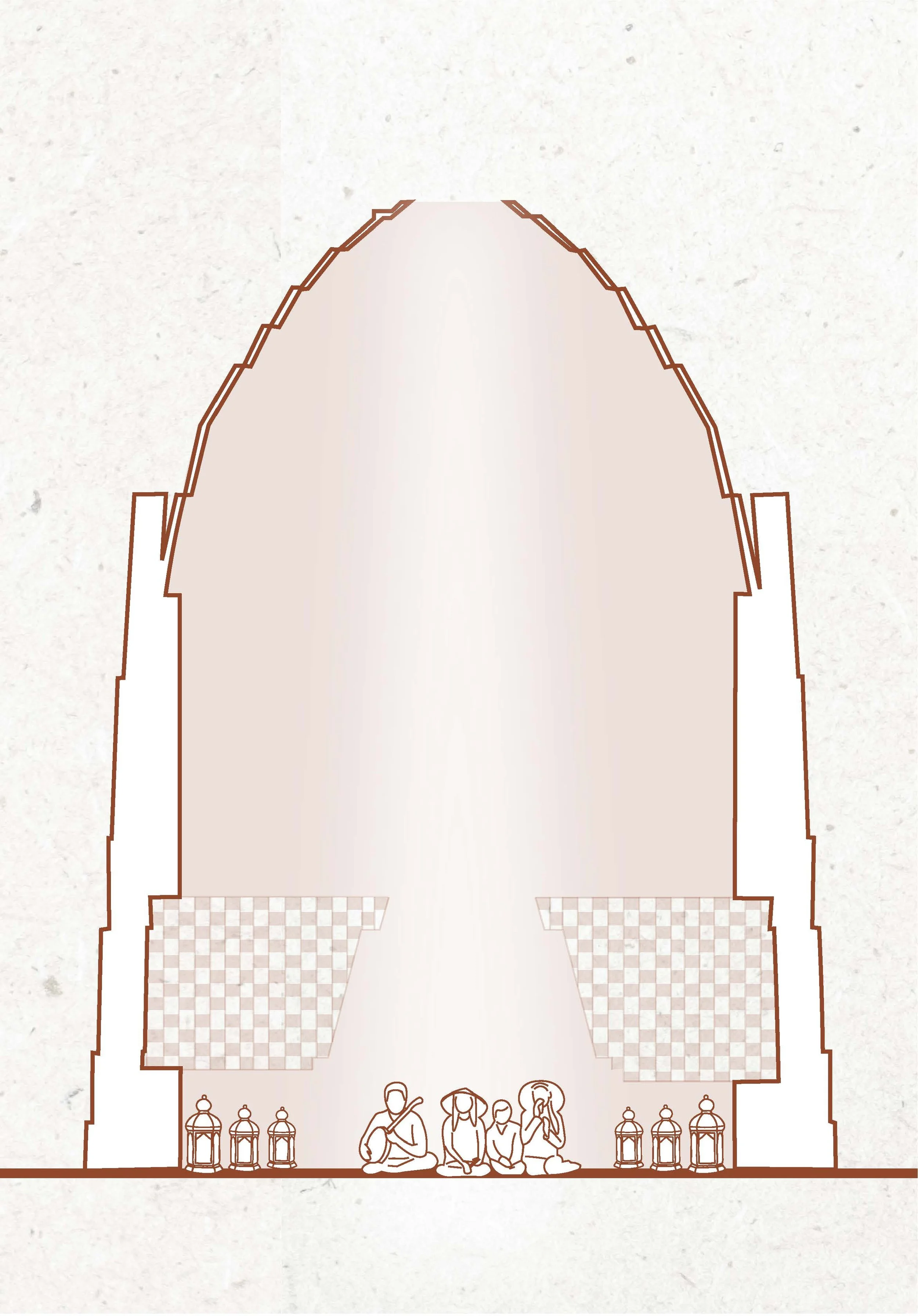
A flexible community space designed for traditional South Vietnamese cultural activities such as Đờn ca tài tử performances and Tai Chi practice. The open-air warehouse features breathable façades and bamboo mat flooring that encourages barefoot engagement and floor-based gatherings. The space functions as a contemporary venue for preserving cultural practice while maintaining the material and spatial language of the original structure.
Kiln Design
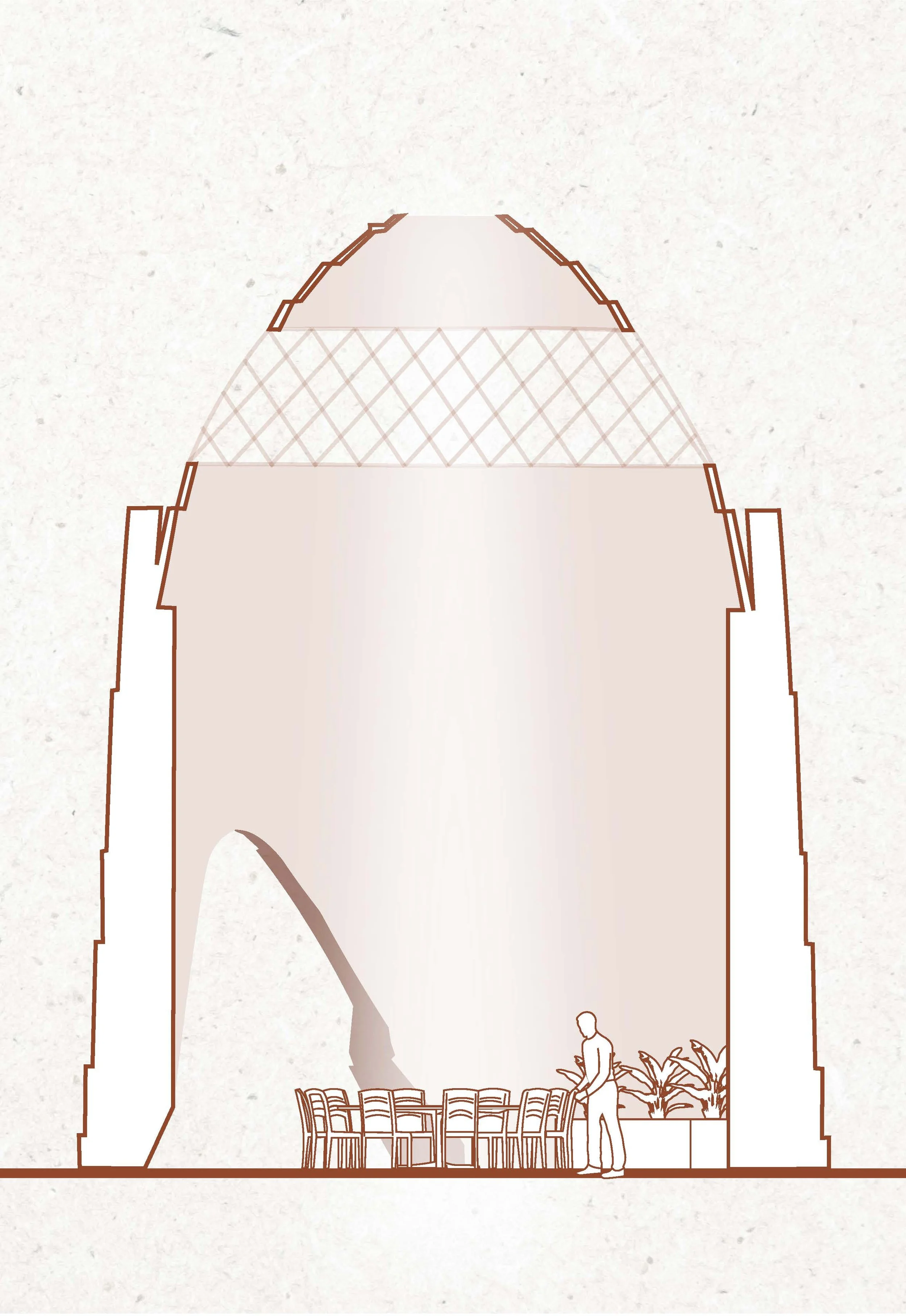
Private Dining Kiln
Attached to the restaurant, this kiln becomes an intimate dining chamber with one large ten-person table placed at its center. By leaving the space minimally altered, the design preserves the monumentality and spiritual presence of the kiln, turning it into a rare ceremonial dining experience rooted in heritage.
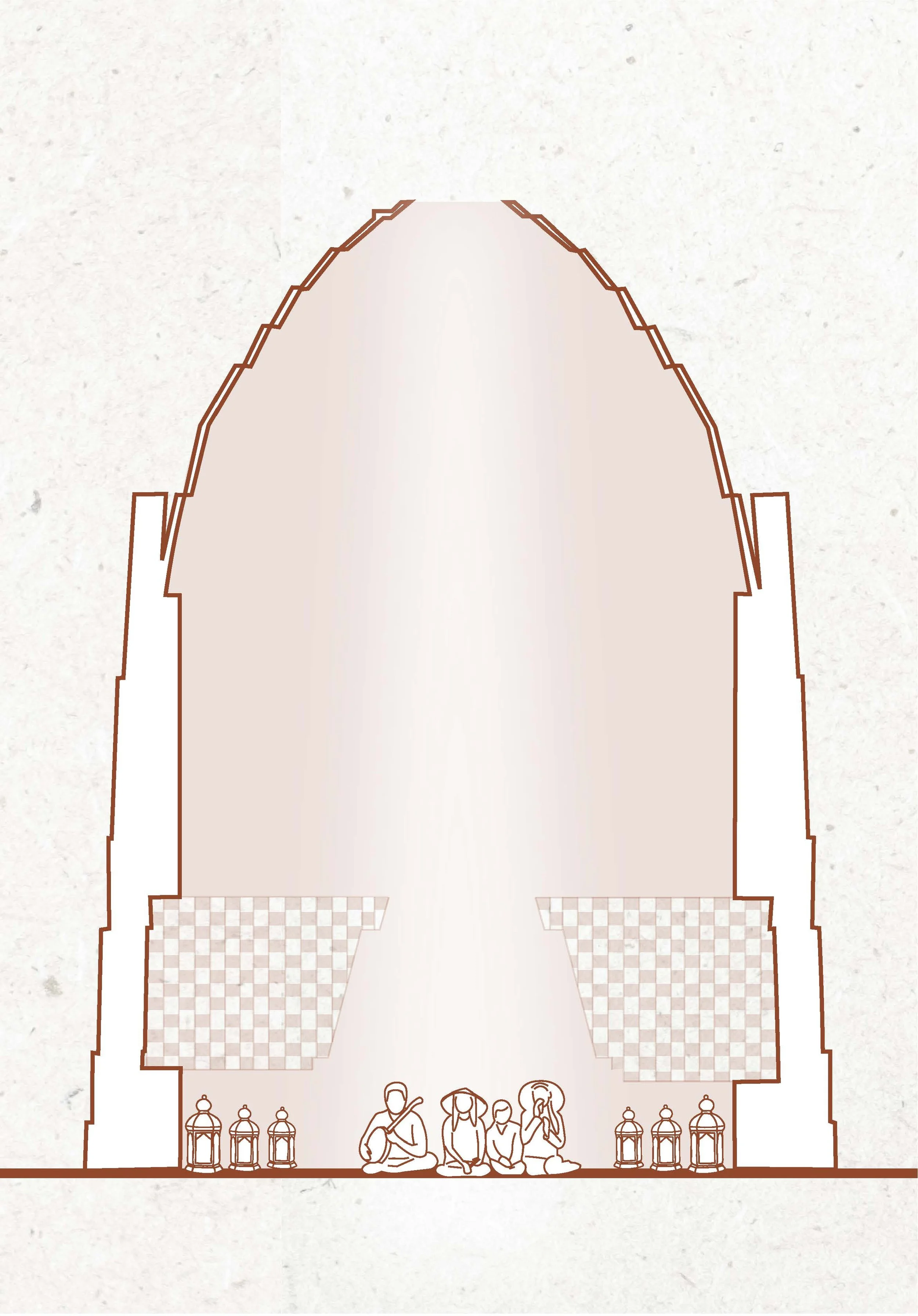
Cultural Activity Kiln
Paired with the cultural complex warehouse, this kiln serves as a protected performance and gathering space for traditional practices such as Đờn ca tài tử and Tai Chi. Subtle openings are added for natural daylight, eliminating the need for artificial lighting while allowing the kiln to breathe as a quiet cultural vessel.
Preserve
Highlighting and protecting site’s cultural heritage.
Landscape Design
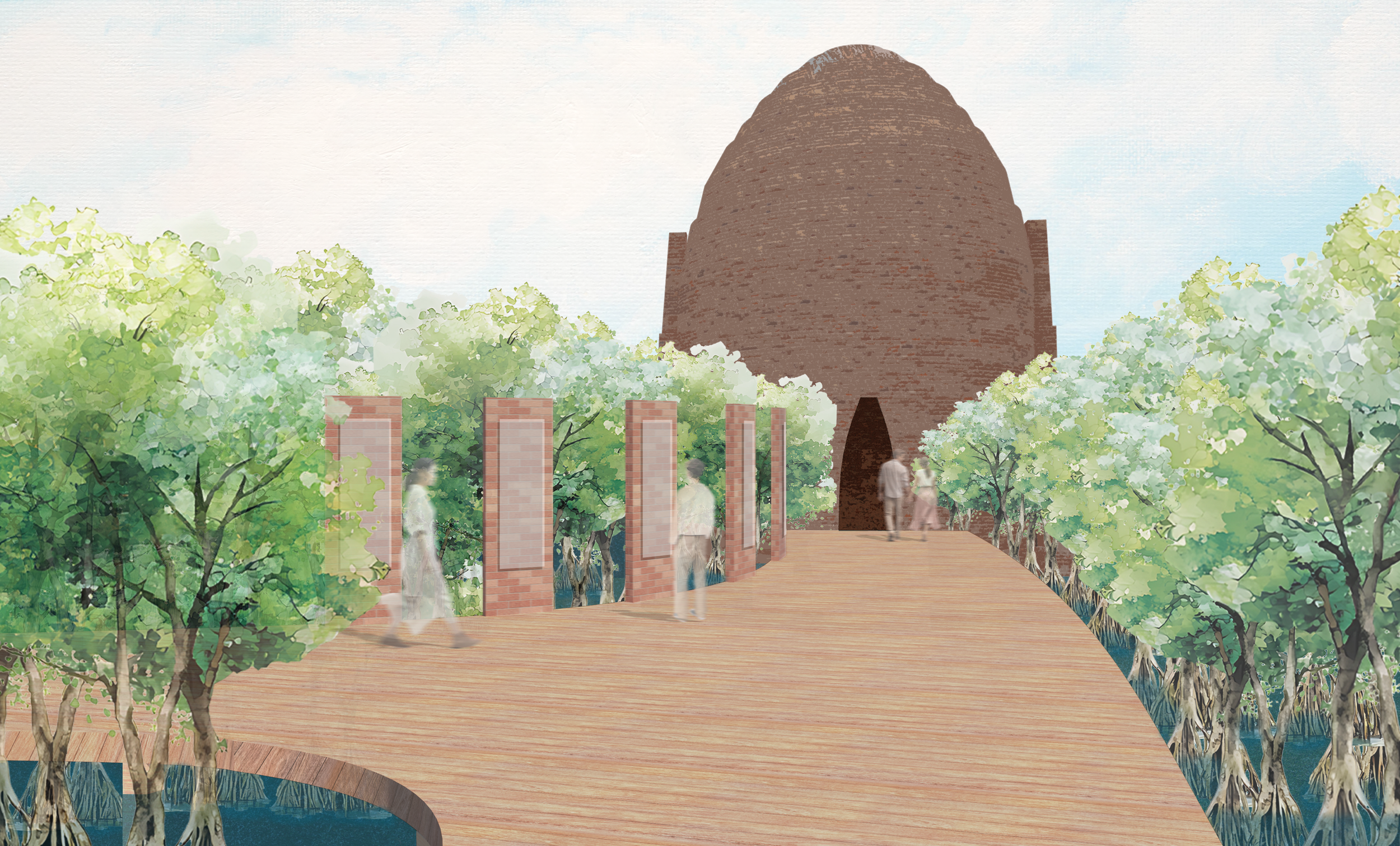
Heritage Path
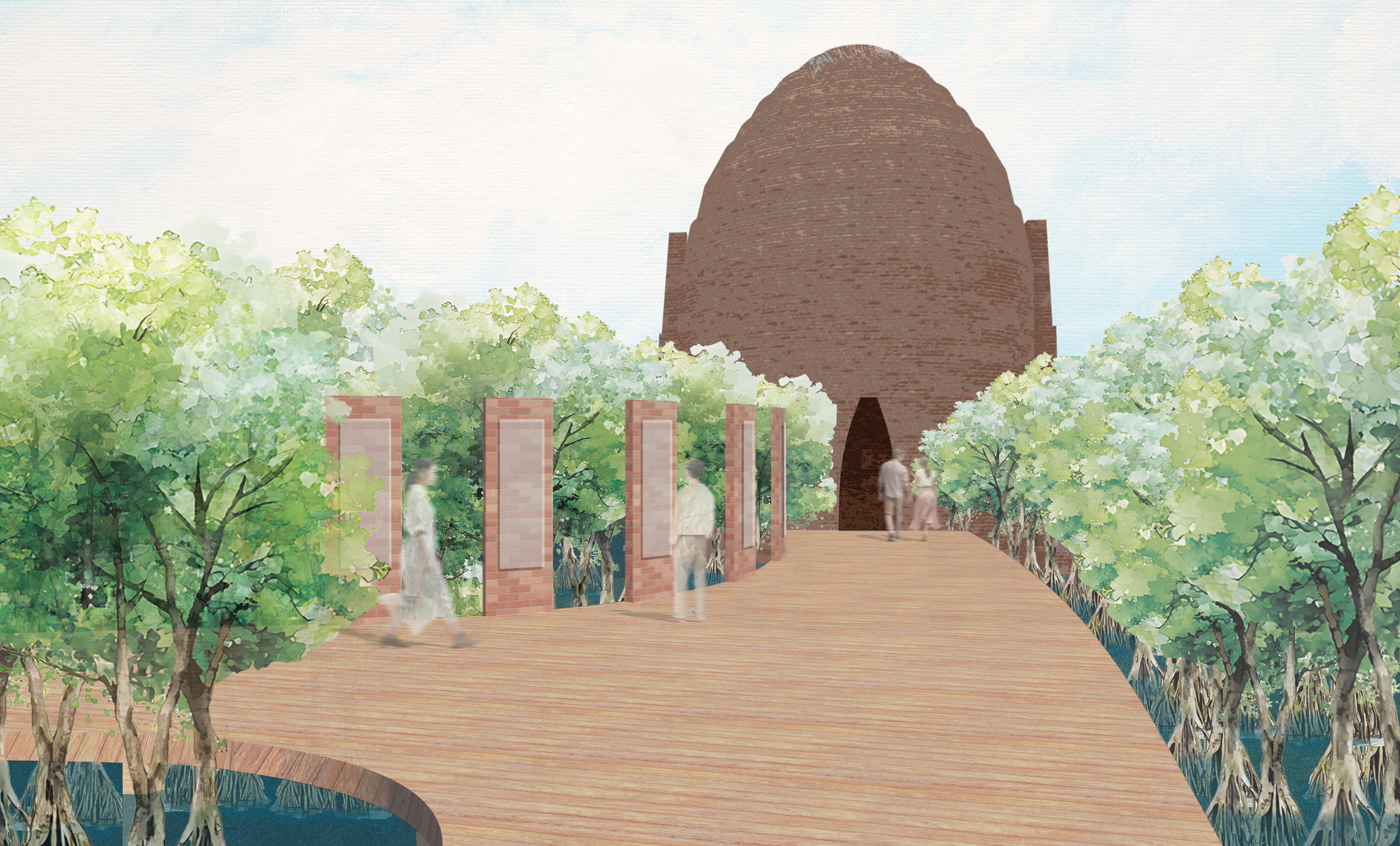
A preserved landscape route that guides visitors through a mangrove forest toward the untouched historic kiln, framing it as a sacred architectural relic. Informational signage along the path shares the village’s brickmaking history, transforming the journey into a quiet cultural narrative. The path becomes both a spatial and educational link between architecture, ecology, and memory.
Kiln Design
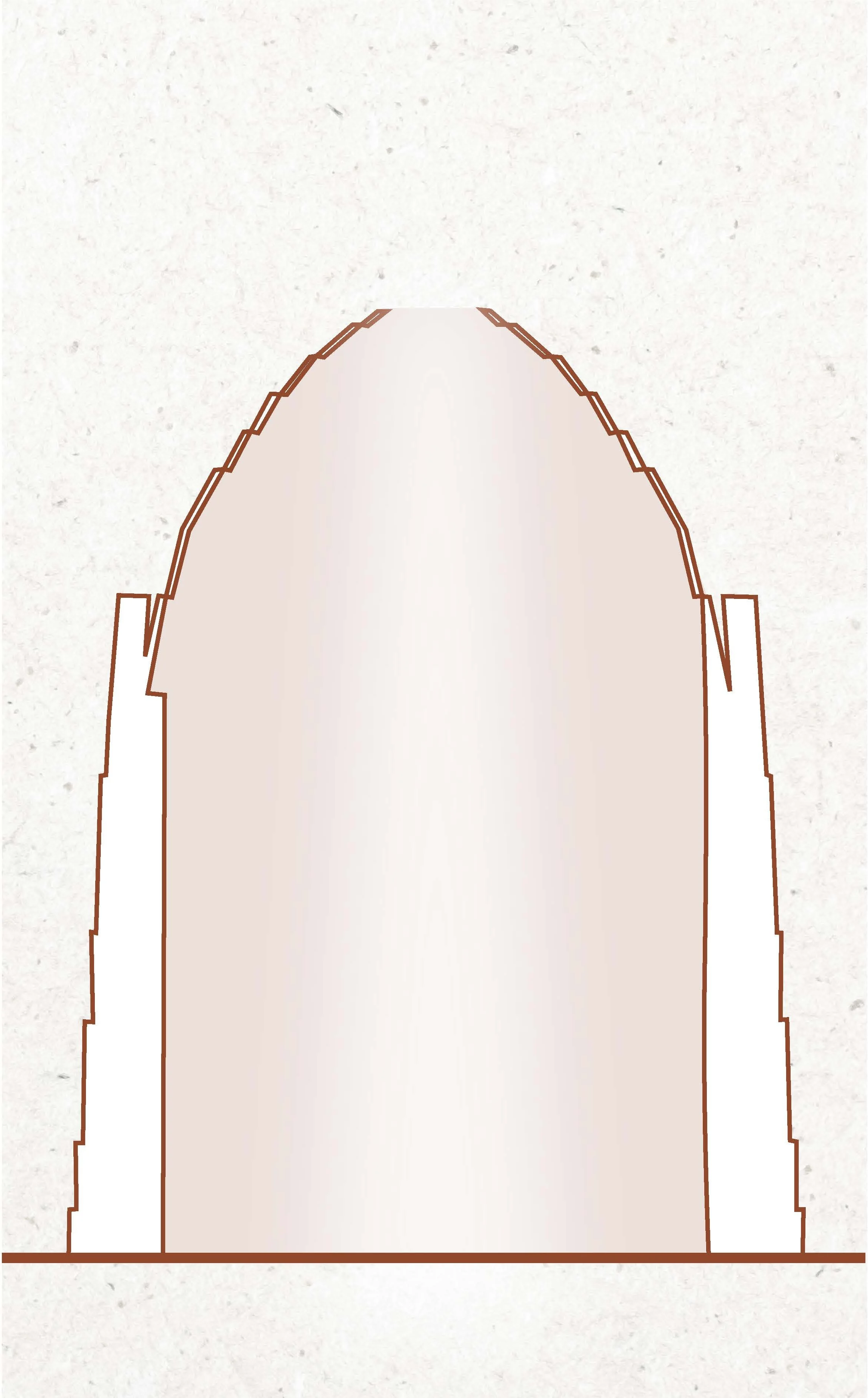
Preserved Historic Kiln
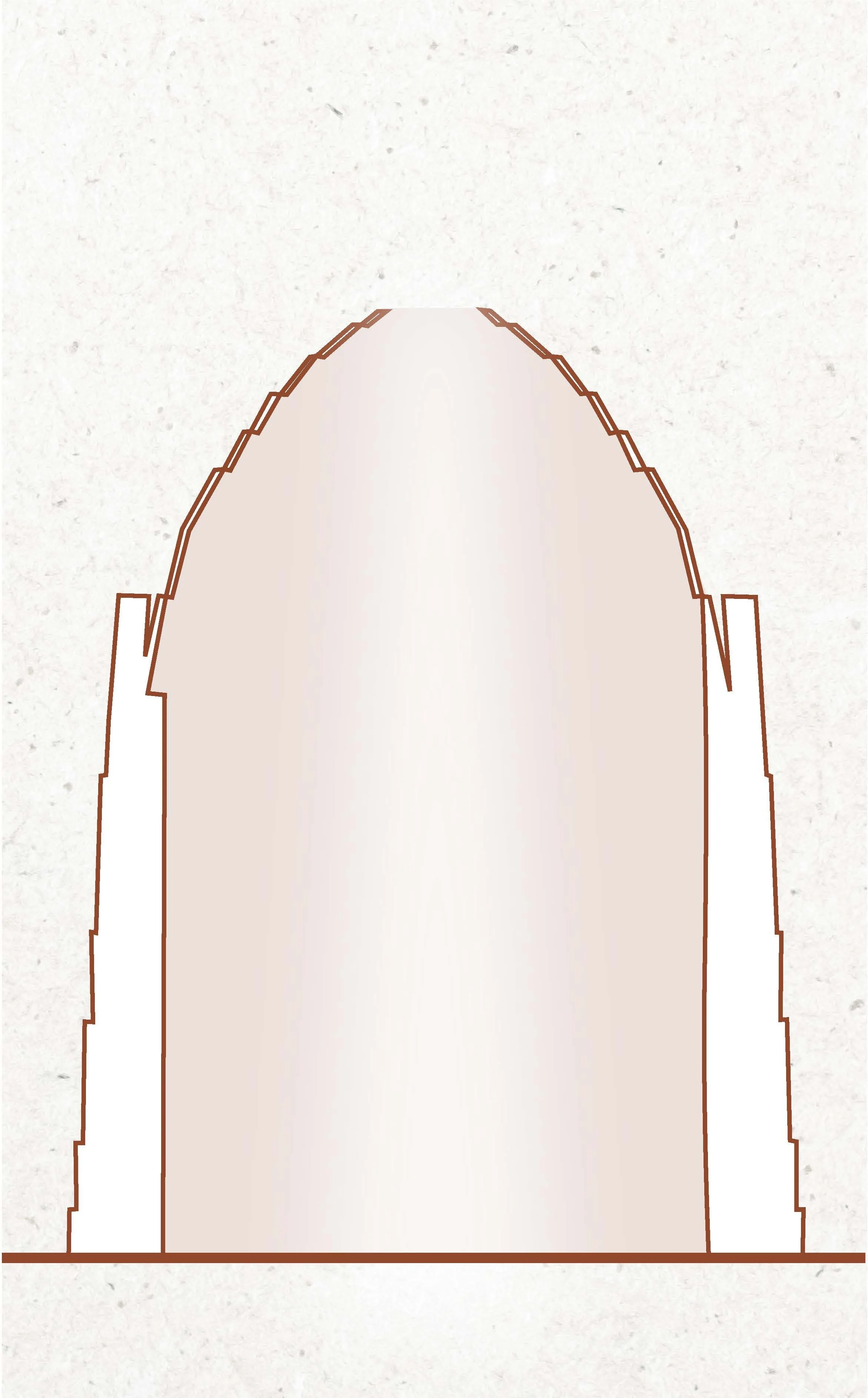
Located furthest from the developed core of the site, this kiln remains completely unaltered as a preserved artifact of Mang Thít’s brick-making history. Surrounded by restored landscape, it becomes the final destination of the heritage path — a contemplative reminder of the past that grounds the entire project in memory and authenticity.
Kiln Design
Electric
Storage
Private Dinning
Cultural
Preserved Historic